
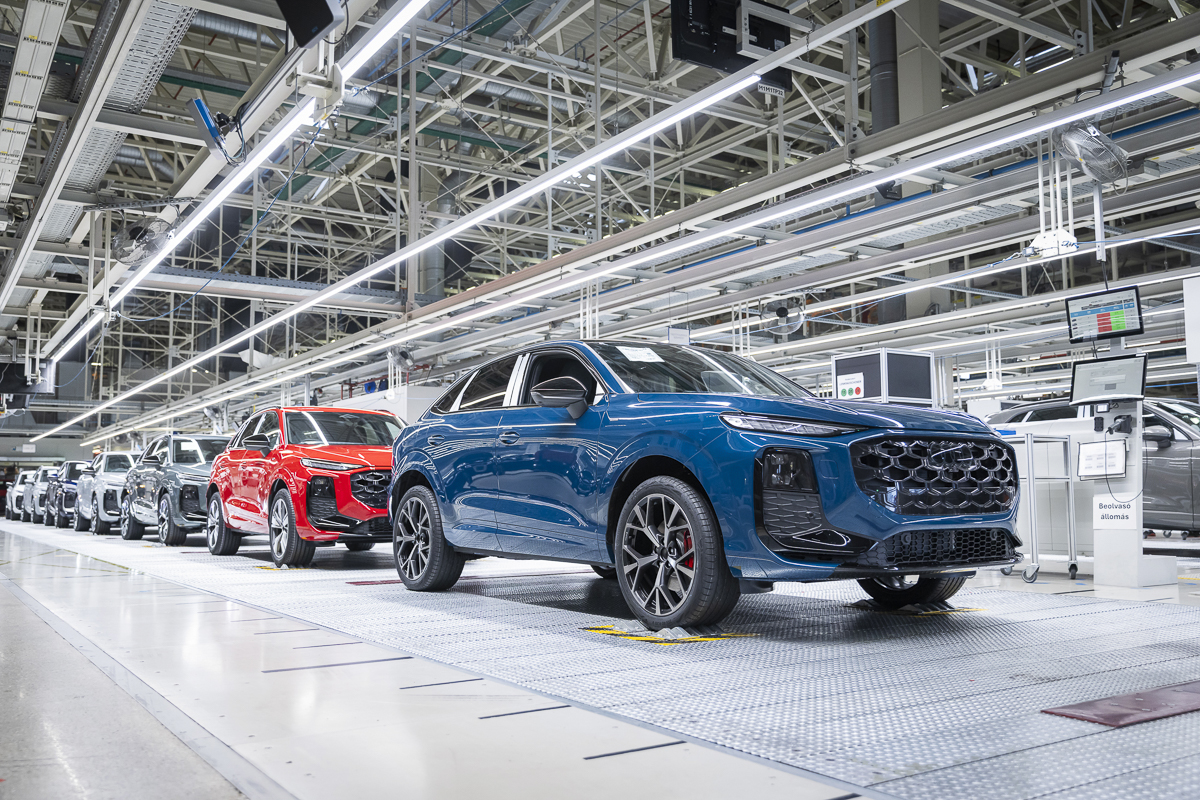
At Audi Hungaria, quality is our highest priority. Our processes ensure that we can deliver premium quality throughout our entire process chain over the long term, ultimately resulting in a perfectly functioning powertrain or car. As a multi-brand production site, we recently saw the 100,000th CUPRA Terramar roll off our production line, and in total more than 2.5 million cars now proclaim the Győr plant’s passion for quality around the world.
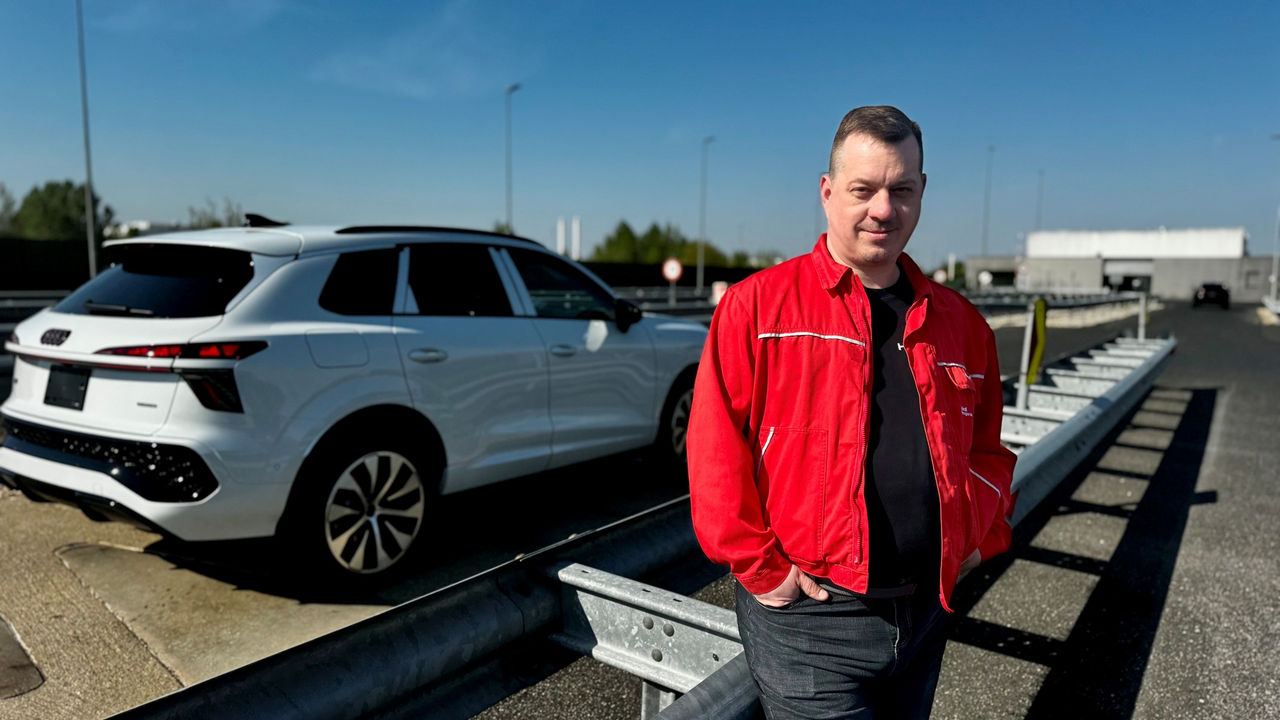
Our results are backed by a coordinated system worked out down to the smallest detail, with the final checks carried out by the vehicle factory quality assurance team. One employee of this area is János Léber, who has already proven not only his professional competence, but also his sincere enthusiasm in several roles through exciting career moves.
János had already been working as an IT professional for 15 years when he felt that this career no longer held any challenges for him. The Audi Hungaria test track was close to his home, where he could regularly see the company's test drivers at work, so his longing grew stronger every day. Then, on a beautiful summer day, he himself could sit behind the wheel of an A3 Limousine in that certain red coat and watch its every reaction, noise and behaviour.
How is this work different from "traditional" driving?
The biggest difference is that here the purpose is not transport, but continuous observation and evaluation. This requires serious concentration and routine when driving. In addition, there are several cars on the track at the same time, so we pay close attention to each other and to traffic situations during the external test drive.
What criteria do you use to test the cars during use?
We always look at the car through the eyes of a demanding customer, whose criteria are governed by group standards. A small noise or a subtle vibration may seem insignificant at first, but it can quickly become noticeable during everyday use, not to mention if a function doesn't work as we would expect. We therefore take every such deviation seriously. The customer expects the car to be reliable, quiet (or even passionately loud in certain situations) and predictable in all situations. For me, that's what premium quality means: when everything in the car is natural, predictable and works according to plan. When it communicates clearly with the driver, but does not overload them with information. If the design is clean, sophisticated and modern, and of course when I can't find anything objectionable in it even if I look for it.
Are there standard test rounds or situations that all vehicles must complete?
Yes, the whole test drive – both on the track and on the external test route – is strictly standardised. Each type comes with a detailed, multi-page test description. This ensures that our colleagues perform the same tests in the same order and along the same route, so that results remain comparable and objective.
What conditions do you simulate on the track?
On the track, we try to reproduce as many situations of real-life usage as possible. On the acceleration section there are two types of asphalt surfaces, while on the bumpy section there are 12 different road surfaces, including cobbled sections, grass pavers, a railway crossing, manhole covers and various road defects. All cars produced in Győr go around the track without exception and the same standards apply to all brands, including Audi and CUPRA, regardless of the target market. Rarely, but extreme cases do happen, of course. I always smile when I think back to a TT Roadster test when we used the factory fire brigade to simulate heavy rain and flood the test track with several cubic metres of water.
How do you guarantee that the customer always receives an immaculate vehicle?
Each car goes through a standardised test process on the test track. In addition, 8% of the cars are taken out for an external test drive, where they are subjected to a higher load in real traffic conditions. Here we can also test the operation of the assistance systems. When setting up our tests, we aimed to be able to test as many features as possible, but also to keep the test time low. In this way, we have managed to test 100% of the cars produced within the Group with high efficiency. I also consider it important that if any intervention is carried out on a car that could affect the results of the test drive, it comes back to us for a check.
Today you no longer work as a test driver, but as a support engineer. What does an average workday look like for you?
Basically, I work in the vehicle factory, where my day always starts with a morning coordination meeting. After that I go down to the test track, where I discuss the current tasks and focus points with my colleagues, and often also consult with the analysis staff on how to assess a specific fault. The second half of the day will focus on data analysis, administration and development work. I particularly like this duality. My job is often enriched by film shoots, events, professional visitors from other sites, as many people are curious about our work. All the more so because the Győr test track is considered a real benchmark, which we are constantly improving with our own solutions.
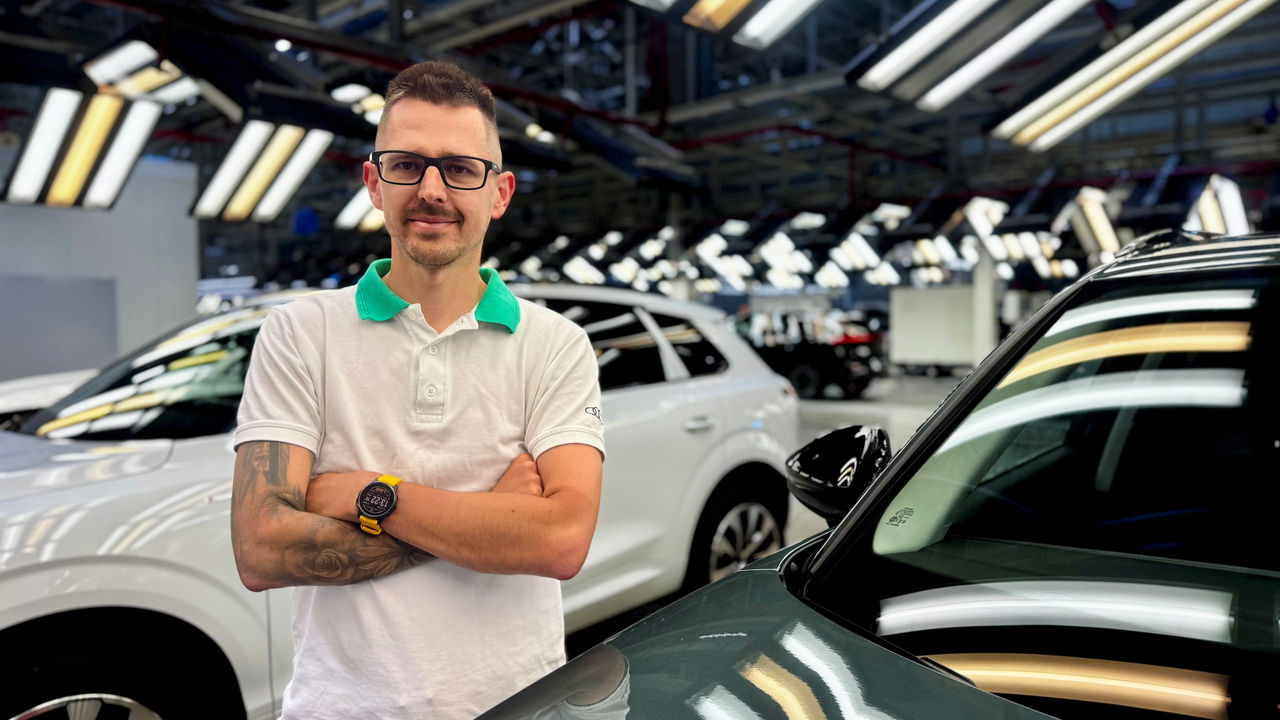
The cars produced in Győr return from the test track to another important area of quality assurance, the hall where the final inspection takes place. While during production the vehicles pass through several digital camera stations and laser scanning processes, in the light tunnels the sophisticated human senses play the leading role in inspection. This is where our young colleague Ákos Skuba works, who joined the Quality Assurance team in 2013. Since 2018, Ákos has been responsible as a team leader for coordinating a team of 13–17 people, and he speaks enthusiastically about the challenges and the beauty of his work.
How does premium quality manifest itself in your everyday work?
We work according to a standardised process and a uniform and very strict set of criteria, ensuring that every car, regardless of which of my colleagues is inspecting it, is of the same high quality down to the smallest detail. For me, premium quality means consistency without a compromise.
What inspections do you carry out?
Our work consists of two line sections. After the cars return from the test track, they pass through a 40-metre-long cabin that imitates monsoon rain, to test their sealing. They then arrive in the Finish 1 light tunnel, in a more brightly lit environment than under the lights of the production hall. In this section 1, possible surface defects are filtered out, so we are looking for deviations in the bodywork and the paintwork. In the Finish 2 light tunnel, we focus on the interior of the cars, also checking for noises. We use a measuring star for the measurements and we rely on sensory observation, including touch.
There is a strong emphasis on the senses. How much does routine and individual experience matter?
Our new colleagues are always taught by an experienced mentor at the beginning, so after 1 or 2 months their eyes become accustomed to the special lighting conditions, they can spot even the smallest deviations. Routine develops over time. In most cases, the layman would not notice these defects, but premium quality obliges us. Not to mention that we “place the final tick” in the otherwise fully digitally documented production lifecycle of the vehicles, as after us comes packaging, and the flawless Audi or CUPRA models are already on their way to their destination.
I'm not saying that constant concentration is not tiring, so we rotate line sections among ourselves every four hours within a shift.
You're still very young, but you've been working here for 13 years, so you have an overview of the development of production. What has changed in that time?
The line has become faster, and the cycle times have shortened accordingly. We currently work three shifts, six days a week, and 813 cars roll off the line every day, so 271 vehicles pass through our hands per shift. These are staggering figures, while the premium quality expected and customary at Audi Hungaria hasn't changed at all: the cars get the same attention they deserve from everyone.
What motivates you every day in your work?
I really like to organise, coordinate and deal with people. Every day I’m faced with a variety of challenges, which I manage well, and working together with my team is both enjoyable and effective. I prepare reports and give presentations; human relationships energise me. Whether customers think about the thorough quality assurance system behind their premium car, I don't know. I'm sure that when a group of factory visitors passes by us, 10 out of 10 of them are amazed and nod in recognition at the thoroughness of our processes, and that makes me very proud too.